GPU (NVIDIA)#
Lineage of all NVIDIA’s GPU generations named after scientists, mathematicians, engineers
Architecture |
Approx. Release |
Named After |
Representative GPU / Platform |
Specs, brief |
Notes |
|---|---|---|---|---|---|
Tesla |
2006 |
Nikola Tesla |
Tesla C870 / G80 |
Early CUDA GPU; GDDR3-class memory; FP32 CUDA compute |
CUDA/unified shader era begins; general-purpose GPU compute becomes practical. |
Fermi |
2010 |
Enrico Fermi |
Tesla M2090 |
6GB GDDR5, ~178GB/s; ~1.33 TFLOPS FP32, ~665 GFLOPS FP64 |
ECC, cache hierarchy, stronger FP64, serious HPC compute. |
Kepler |
2012 |
Johannes Kepler |
Tesla K80 |
24GB GDDR5 board, 480GB/s; ~5.6 TFLOPS FP32 board |
Hyper-Q, dynamic parallelism; K80 was dual-GPU. |
Maxwell |
2014 |
James Clerk Maxwell |
Tesla M40 |
24GB GDDR5, 288GB/s; ~7 TFLOPS FP32 |
Efficiency-focused architecture; common before Tensor Core GPUs. |
Pascal |
2016 |
Blaise Pascal |
Tesla P100 |
16GB HBM2, ~732GB/s; ~10 TFLOPS FP32, ~21 TFLOPS FP16 |
HBM2 and NVLink; strong FP16, but no Tensor Cores yet. |
Volta |
2017 |
Alessandro Volta |
Tesla V100 |
16/32GB HBM2, ~900GB/s; ~125–130 TFLOPS Tensor mixed precision |
First Tensor Cores; V100 became foundational for AI training. |
Turing |
2018 |
Alan Turing |
NVIDIA T4 |
16GB GDDR6, ~320GB/s; 65 TFLOPS FP16, 130 INT8 TOPS |
RT Cores + Tensor Cores; very important inference GPU. |
Ampere |
2020 |
André-Marie Ampère |
A100 80GB |
80GB HBM2e, ~2TB/s; up to 624 TFLOPS FP16/BF16 sparse |
TF32, MIG, structured sparsity, third-gen Tensor Cores. |
Ada Lovelace |
2022 |
Ada Lovelace |
RTX 4090 / RTX Ada |
24GB GDDR6X-class flagship; ~1TB/s-class bandwidth; strong FP32/RT/Tensor throughput |
Client/workstation graphics + AI; DLSS 3, stronger RT/Tensor Cores. |
Ada Lovelace |
2022 |
Ada Lovelace |
L40S |
48GB GDDR6 with ECC, 864GB/s; 91.6 TFLOPS FP32, 362.05 TFLOPS FP16/BF16 Tensor, 733 TOPS INT8 Tensor |
Data-center universal GPU for inference |
Hopper |
2022 |
Grace Hopper |
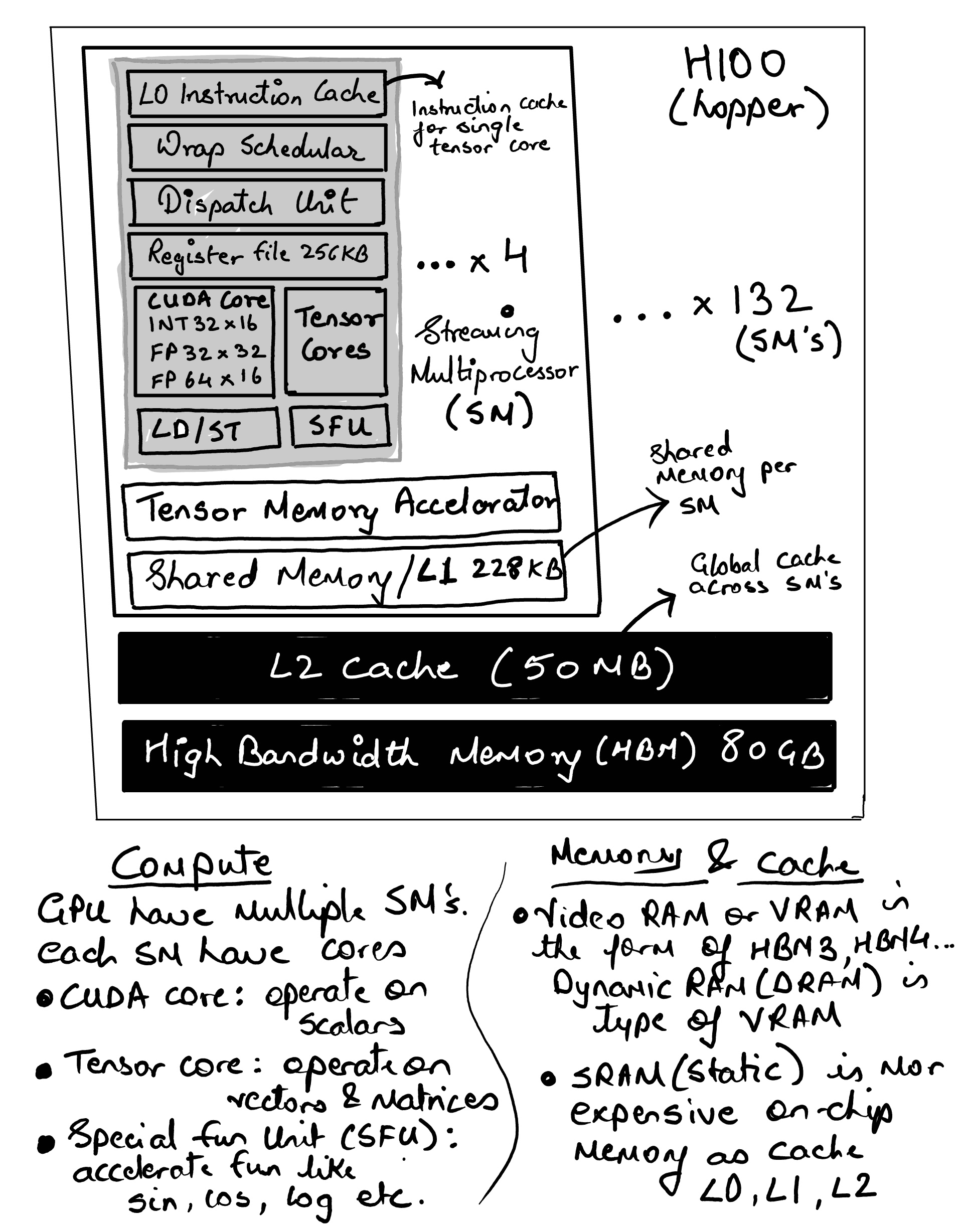
H100 SXM |
80GB HBM3, 3.35TB/s; ~1,979 TFLOPS FP16/BF16 sparse, ~3,958 TFLOPS FP8 sparse |
FP8 Transformer Engine, TMA, WGMMA, fourth-gen Tensor Cores. ([NVIDIA][3]) |
Hopper |
2023 |
Grace Hopper |
H200 SXM / PCIe |
141GB HBM3e, 4.8TB/s; FP8 Tensor Core performance ~4 PFLOPS |
Same Hopper generation; H200 is primarily the memory-capacity/bandwidth upgrade over H100. |
Blackwell |
2024 |
David Blackwell |
B200 / GB200 |
DGX B200: 1.44TB HBM3e total, 64TB/s; 72 PFLOPS FP8, 144 PFLOPS FP4 system-level |
Fifth-gen Tensor Cores, FP4/NVFP4, second-gen Transformer Engine, large NVLink scale-up. |
Blackwell |
2025 |
David Blackwell |
RTX PRO 6000 Blackwell Server |
96GB GDDR7, 1,597GB/s; 120 TFLOPS FP32, 2 PFLOPS FP8, 4 PFLOPS FP4 |
Blackwell also spans professional RTX/server GPUs, not just B200/GB200. |
Blackwell Ultra |
2025/2026 |
David Blackwell |
B300 / GB300 |
DGX B300: 8× B300, 8×288GB = 2.3TB total; 72 PFLOPS FP8 training, 144 PFLOPS FP4 inference |
Higher-memory Blackwell refresh for reasoning/inference; NVIDIA also describes 288GB HBM3e per GPU. |
Vera Rubin |
2026 platform |
Vera Rubin |
Vera Rubin NVL72 |
NVL72: 20.7TB HBM4, 1,580TB/s rack memory bandwidth; per GPU options shown as 576GB/44TB/s and 288GB/22TB/s |
Rubin GPUs + Vera CPUs, NVLink 6, ConnectX-9, BlueField-4, Spectrum-6; NVIDIA also references Groq 3 LPX/LPU integration in the platform. |
Feynman |
Future roadmap / 2028 target |
Richard Feynman |
Feynman + Rosa CPU platform |
Public roadmap only; final memory/FLOPS not productized |
Next major architecture beyond Rubin. |
GPU to GPU inference#
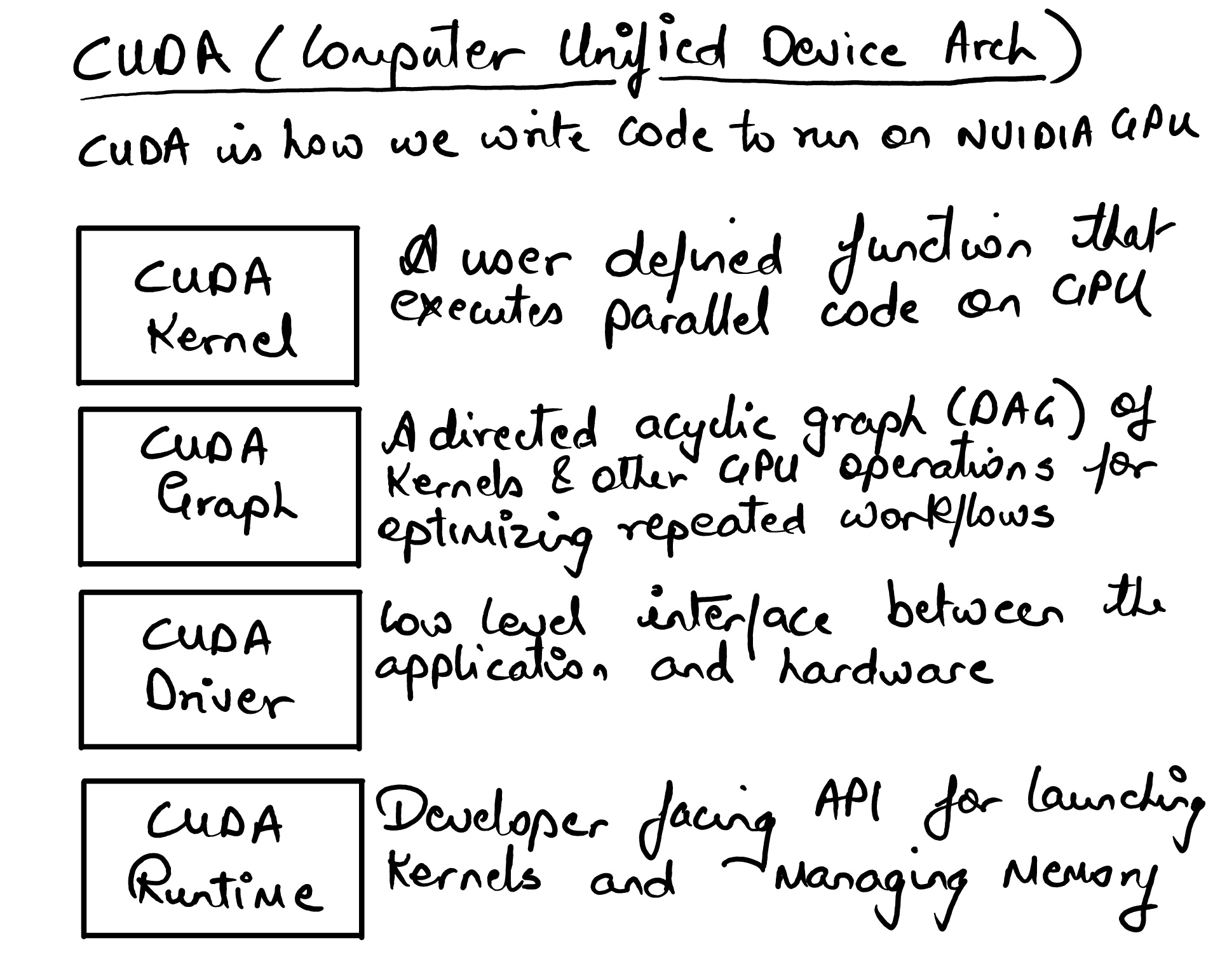
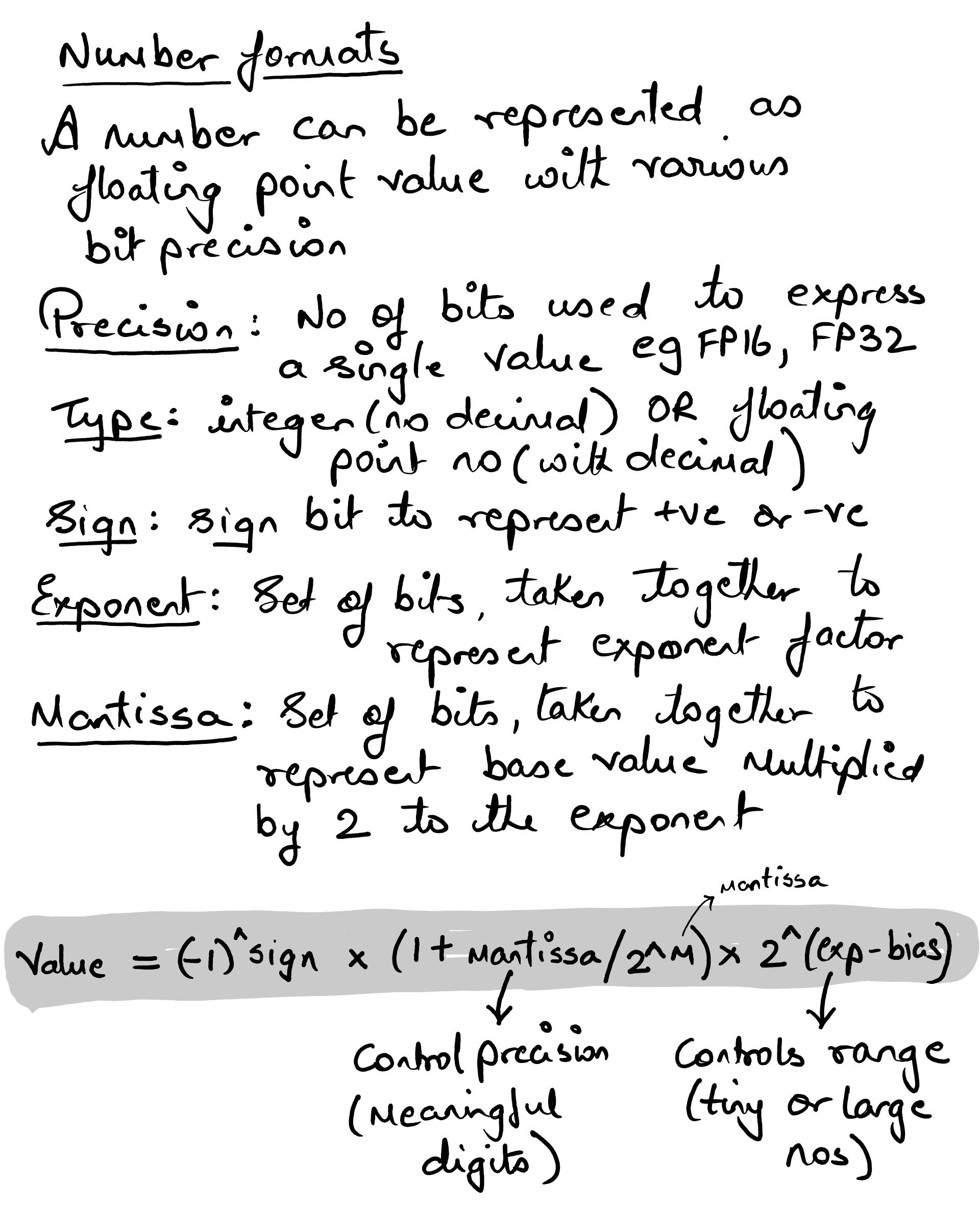
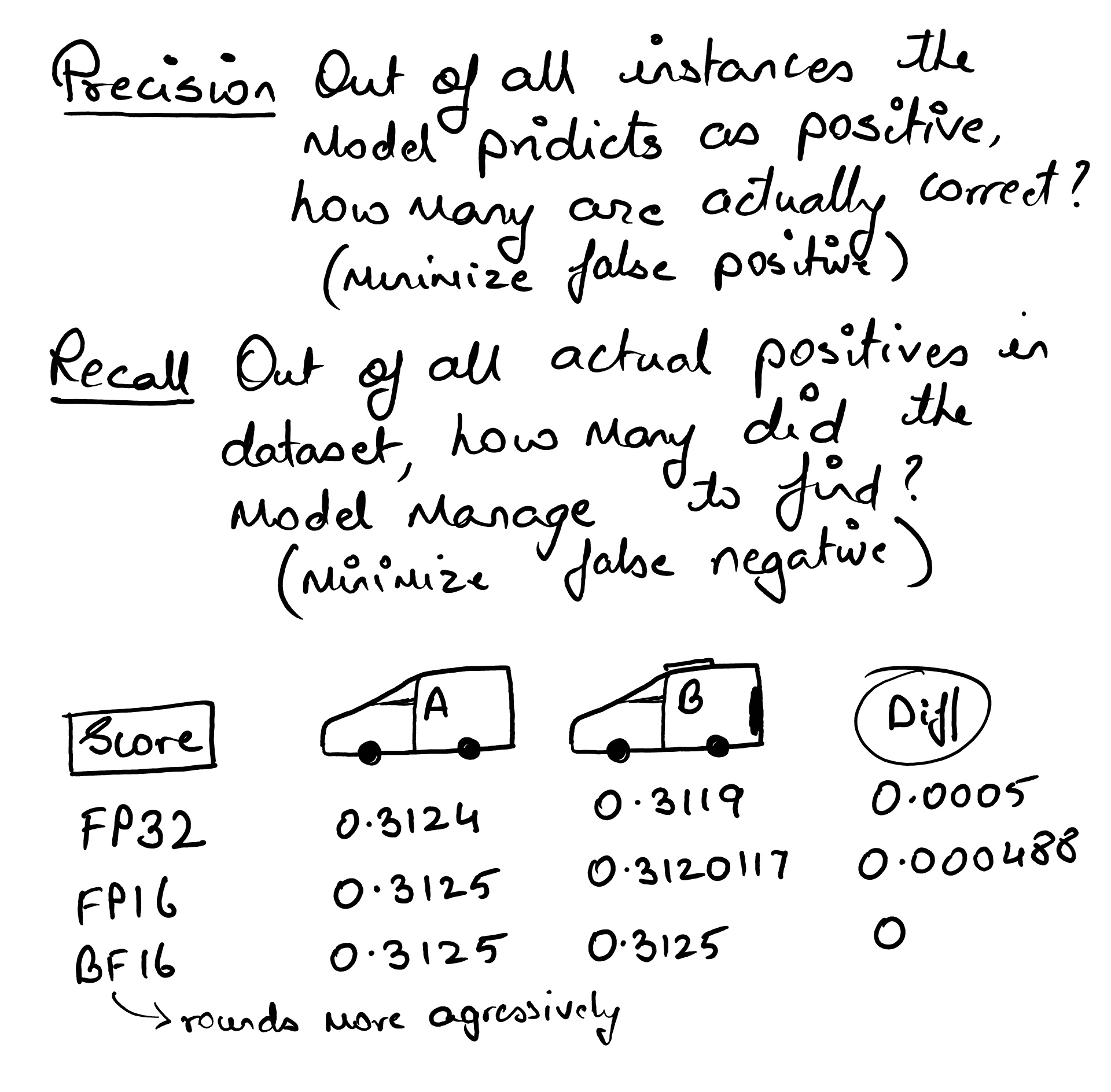
How 152,384 and 0.0003456 are represented in different GPU number formats
Format |
Total Bits |
Exponent Bits |
Bias |
Mantissa Bits |
Approx Precision |
|
|
|---|---|---|---|---|---|---|---|
FP32 |
32 |
8 |
127 |
23 |
~7.2 decimal digits |
|
|
FP16 |
16 |
5 |
15 |
10 |
~3.3 decimal digits |
|
|
BF16 |
16 |
8 |
127 |
7 |
~2.4 decimal digits |
|
|
FP8 E4M3 |
8 |
4 |
7 |
3 |
~1.2 decimal digits |
out of range; max finite |
|
FP8 E5M2 |
8 |
5 |
15 |
2 |
~0.9 decimal digits |
out of range; max finite |
|
Raw INT8 |
8 |
none |
none |
none |
integer only |
overflow if raw signed INT8 |
|